
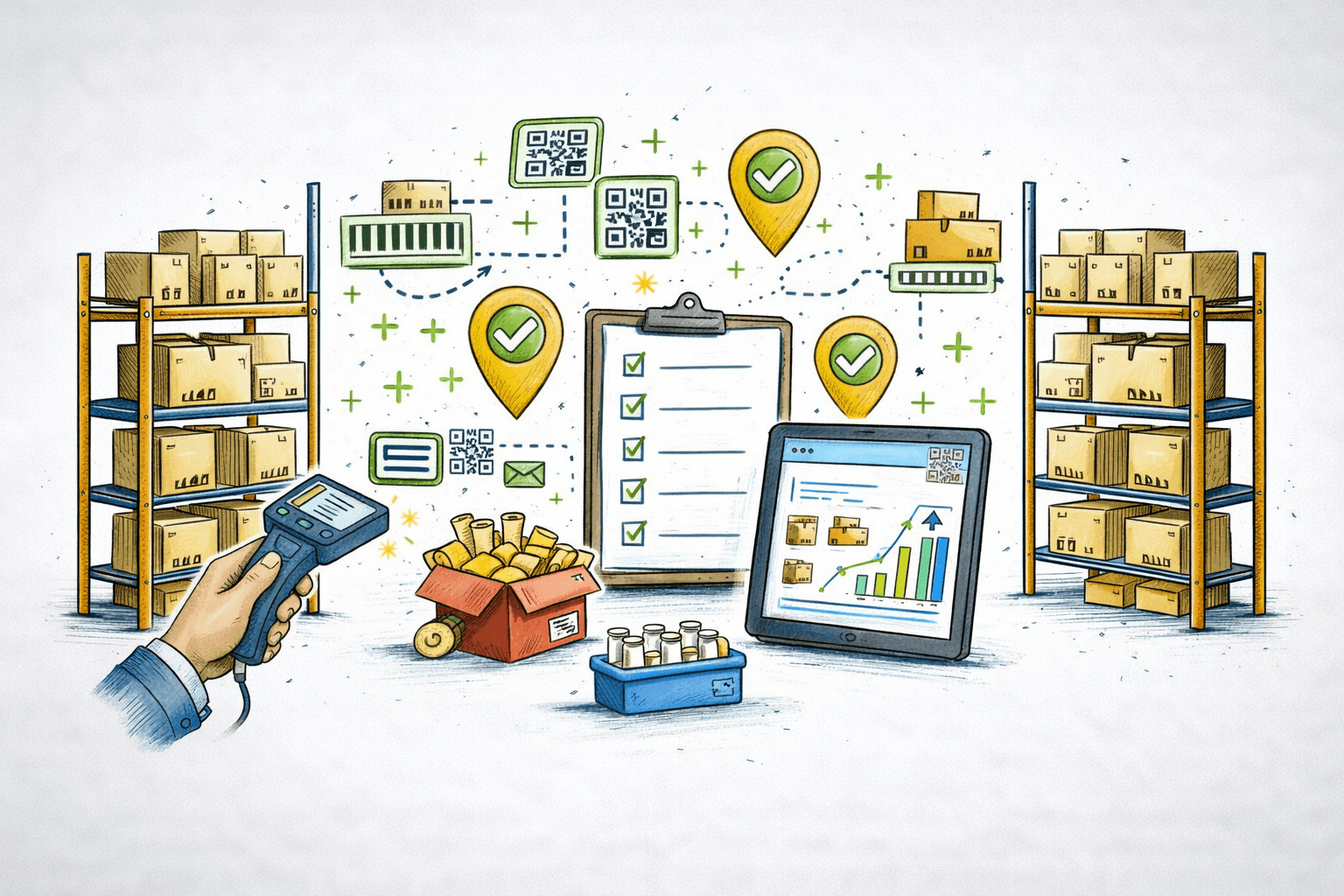
The movement of goods is not just a transportation process.
It is a checkpoint for the entire operation of the business.
In practice, any movement of a product — from warehouse to warehouse, from warehouse to customer or from supplier to business — is a point where a mistake can be made.
Wrong quantities. Delays. Inconsistency in data. Different image between warehouse, sales and administration.
And the most important?
Lack of real image.
When the traffic is not properly organized, the business does not know what is really going on. There is no clear picture of stocks, no certainty of what is gone and what is not, and each deviation creates chain problems.
In practice, it is not about recording.
Is the Flux.
How a movement starts. How it's recorded. How it's confirmed. And how it connects to the rest of the business.
If these are not clear, then the process works piecemeal.
And that's where the mistakes start.
Many businesses are trying to solve the problem with more controls. More checks, more confirmation, more “attention”.
In practice, however, this does not solve the issue.
It makes it slower.
The solution is not more control in the end.
It's better organization in the beginning.
There should be a clear distribution process. Be clear what is happening at each stage. And the information should be recorded at the time it happens — not in retrospect.
If you want to see how this logic is applied in practice within the warehouse, you can see the structure of an organized approach to Warehouse Management.
When the handling is properly organized, the overall function changes. The warehouse has a clear view, sales know what is available, and management can rely on the data.
There are no "surprises".
There is consistency.
Of course, trafficking does not operate in isolation. It is directly linked to the overall flow of the business.
By managing processes and transactions through Flow & Transaction Managementso that every move has continuity and logic.
At the same time, when the data is recorded correctly, they can also be used. Show where there are delays, where mistakes are made and where there is room for improvement.
That's where analysis comes in to connect via Business Intelligence & Reporting, so that information is transformed into decisions.
In cases where the movement takes place away from home or in real time, the proper organization becomes even more important. In this logic, you can see how the process is supported through the Mobile Sales.
So if you want to manage the movement of goods properly, it is not just a matter of recording movements.
It's about being in control of the flow.
Know what's happening the moment it happens.
And on that you should base your operation.
